Happy New Year 2019
http://Background vector created by Flatart – Freepik.com


 Permalink
StFF beneficiary – the 5000 Mile Project – has launched its book entitled: ‘Running South America with my Husband & other animals’.
This expedition was a first! An epic adventure documented by Katharine and David Lowrie, who are both keen environmentalists.
They are giving talks and having book signing events in the UK or you can buy it from the publisher here or if you can’t do that, then from Amazon.co.uk or Amazon.com.
Katharine and Dave are an inspiration but check out their video first and make your own mind up:
http://www.5000mileproject.org/2017/08/book-out-now/
Permalink
From 1 – 30 April 2016, Soundwalk Collective presents JUNGLE-IZED: a month-long interactive multi-sensory art installation that will transform Times Square, transporting over half a million visitors daily to the heart of the Amazon, by following the 73rd Meridian West that connects Times Square with the Amazon rainforest.
Presented in partnership with The Times Square Advertising Coalition (TSAC), Times Square Arts, Audio-Technica, CXA+ART, and David de Rothschild’s The Lost Explorer, this immersive installation includes a participatory audio experience and an interactive video not only to encourage and celebrate a conversation with nature but to bring a heightened awareness around climate change and the environmental impact of our everyday actions.

 Permalink
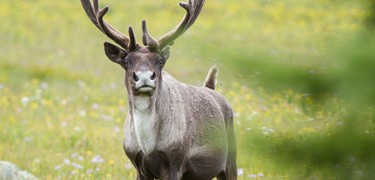
Mountain caribou are on the brink of disappearing across most of their range in the Pacific Northwest of the USA and Canada. David Moskowitz took part in the Wolf OR 7 Expedition, supported by StFF in 2014 and has now launched a new project to explore the world of mountain caribou and the conservation challenges faced to sustain them and the unique mountain landscapes they depend on.
Sculpt the Future Foundation has made a donation towards the project – see project page for more detail.
Permalink
StFF Founder, David de Rothschild, is in Paris this week chairing a round table discussion at the COP21 Summit.
In an online article for Amuse, a digital magazine and video channel published by i-D, David expresses his fears:
Our oceans really are rising and have already risen. It already is hotter and it’s going to get hotter. It’s dry and going to get drier. The familiar shape of continents and countries soon won’t be so familiar, as by the middle of this century we’ll be redrawing the maps as we know it. We are killing ourselves quickly and slowly. We are losing against ourselves. There is no off switch.
I’ve travelled a lot and do what I can to turn this knowledge into positive action. I’m generally an optimist, but I am shit scared.
and offers an idea for how conservation efforts could be approached at the national and international level.
Read David’s article here

PHOTOGRAPHY BY MISHA TAYLOR
The People’s Trust for Endangered Species (PTES) is currently accepting applications from scientific researchers and conservationists in the UK who need funding for projects focusing on endangered species for up to two years.
Grants of between £3,000 and £10,000 per year up to a maximum total of £20,000 are available for projects focusing on endangered species for up to two years. Scientific researchers and those working in the field of practical conservation can apply as long as the project leader is based either within an NGO or a university research department.
The funding will be awarded for work that seeks either to:
High priority will be given to projects that are:
Applications will only be considered from those working in countries classified by the World Bank as low and middle-income. Preference is given to applicants working in their own country rather than UK or other western nationals working abroad.
Priority is also given to applications for conservation and research work on species classified as endangered, critically endangered and extinct in the wild by the IUCN.
Preference will be given to applicants who have a proven, successful history working on the species and/or in that region.
The Trust recommends that applicants allow plenty of time to go through the application process and should start their application at least four weeks before the deadline.
The deadline for applications is 12 February 2016.
Permalink
The Natural History Museum in London reports today that the Museum’s famous Diplodocus, Dippy, will go on tour from early 2018.
The Museum will run an open call to indoor venues in the UK to host the Diplodocus and its ambition is for Dippy to visit every region of the country.

See The Telegraph for more information.
Permalink
Sculpt the Future Foundation beneficiary, Stephen Lamb, from Touching the Earth Lightly sends the following video providing insight into his design philosophy:
Design-Build Research Studio – The Lighthouse from Epitome on Vimeo.